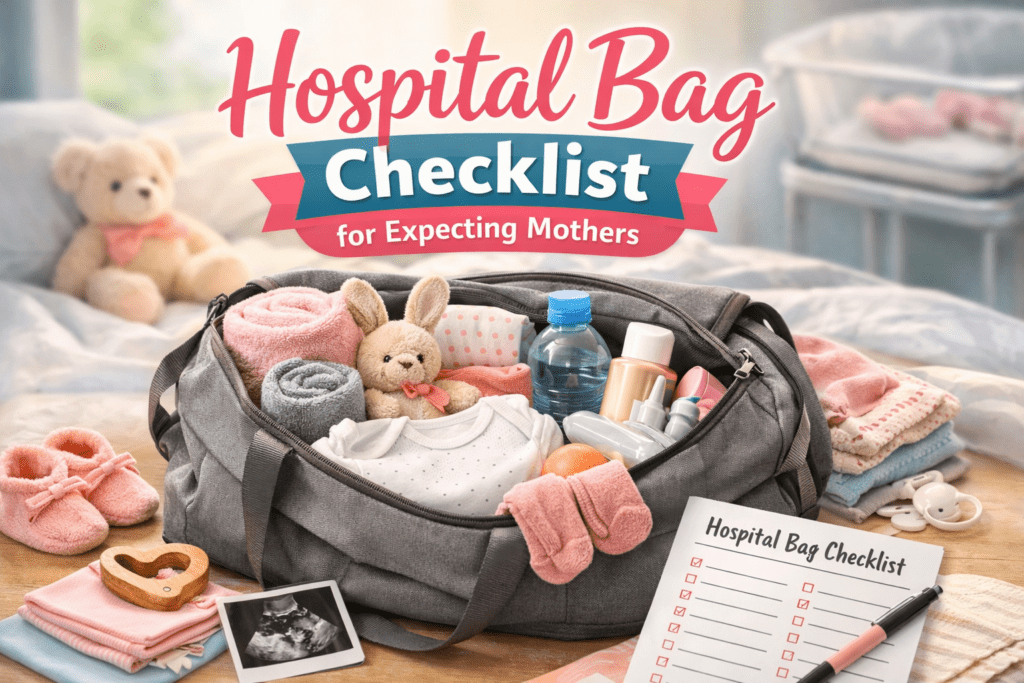
Preparing for your baby’s arrival is one of the most exciting (and sometimes overwhelming) parts of pregnancy. Among all the tasks on your to-do list, packing your hospital bag is a key step that can help you feel calm, confident, and ready for labor day. But what exactly should go in that bag? What do you need for labor, birth, postpartum recovery, and your newborn? This complete guide walks you through every essential item so you won’t forget a thing.
Packing ahead gives you one less thing to worry about when labor starts. Since no two births are exactly the same, this checklist is flexible and allows you to personalize based on your preferences, hospital policies, and your birth plan. From comfy clothes and toiletries to paperwork and baby essentials, we’ve covered everything you might need. So grab a notebook, a cozy drink, and let’s make sure you’re ready for your big day.
When to Pack Your Hospital Bag
Most healthcare providers recommend having your hospital bag packed by 34 to 36 weeks of pregnancy. Why so early? Babies sometimes arrive ahead of schedule, and you don’t want to be scrambling when contractions start or when your water breaks. Packing early also gives you time to think through what you need and avoid last-minute stress.
Start by making a list, and then gather items gradually over a few weeks instead of all in one night. This helps you double-check that you have everything—and prevents forgetting something important. Some moms even keep a small “labor essentials” bag tucked in the car so they’re ready to go whenever labor begins.
Thinking about when to pack also means thinking about convenience. Choose a spot in your home that’s easy to access but out of the way of daily clutter. That way, as you add items, you’ll know exactly where they are and won’t misplace them. Preparing in advance can have a calming effect on your mental health while you wait for your little one to arrive.
How to Choosing the Right Bag?
Believe it or not, the bag you choose matters. A sturdy, roomy bag with multiple compartments makes it easier to organize items, find what you need quickly, and keep things tidy once you’re at the hospital. Many moms choose a duffel bag, backpack, or weekender bag because they are easy to carry and can fit a lot of items.
Why not just use a regular tote? While totes can be cute, they often lack structure and won’t hold bulky items well—like extra clothes or blankets. Look for bags with zippers and pockets, because hospital rooms can get busy and you want items to stay secure. Some moms even pack clear zipper bags inside the main bag to separate items like toiletries, electronics, and baby clothes.
Another tip: choose a bag that you’ll also use after the hospital, like a weekend travel bag. That way, it doesn’t become clutter once the baby arrives. Comfort matters too—especially if you’ll be carrying it into the hospital yourself. Shoulder straps or backpack features make a big difference.
Important Documents and Essentials
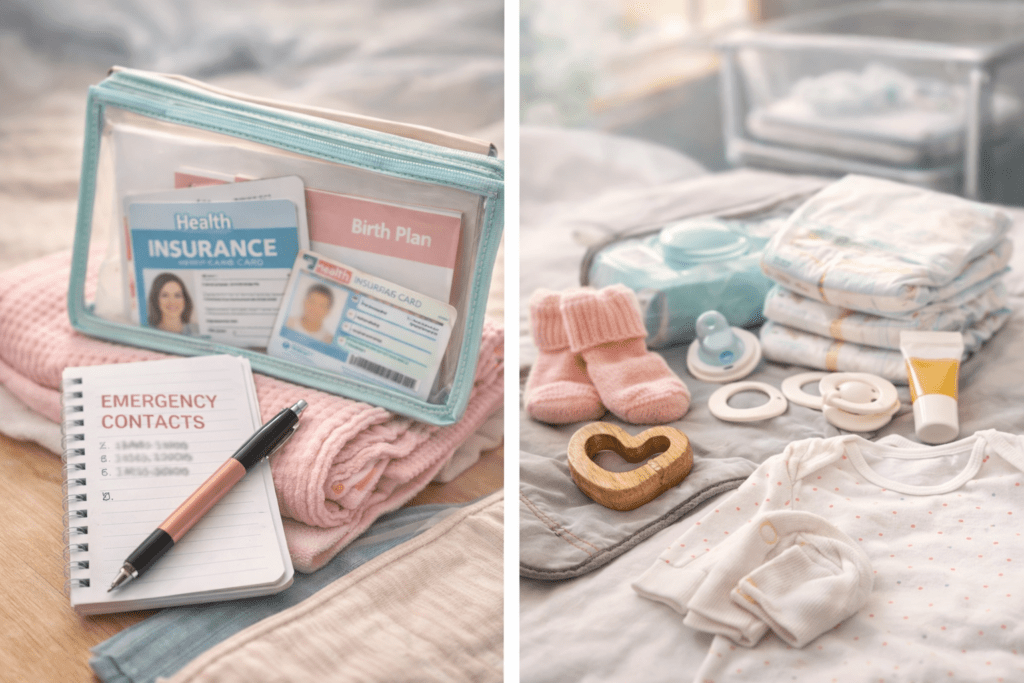
When it’s time to check in at the hospital, paperwork and documentation are first on the list. Make sure to have a designated folder or clear pouch for these things so they stay organized and don’t get lost:
- Insurance card
- Photo ID
- Birth plan (if you have one)
- Hospital registration forms
- List of emergency contacts
- Pediatrician information
- Any prenatal test results or medical notes
Hospitals will ask for your insurance and ID information at check-in, so having those ready saves time and stress. Your birth plan outlines your preferences (e.g., pain management, labor positions, delayed cord clamping), and while things don’t always go exactly as planned, handing it over to your care team helps them support your choices.
Healthcare facilities increasingly use digital records, but having paper copies as backups is still a smart idea. If you have special medical needs or allergies, include clear notes or instructions. You might even take screenshots of digital files to save in your phone just in case.
Labor Day Clothing for Mom
On labor day, comfort is queen. You want clothing that’s loose, breathable, and easy to move in—especially if labor lasts many hours. Hospitals often provide gowns, but many moms prefer their own:
- Comfortable, loose nightgown or robe
- Supportive maternity underwear
- Socks and slippers
- Nursing bras (if you plan to breastfeed)
- Change of clothes for going home
Why these items? Comfortable clothing helps you relax and feel more like yourself, even in a clinical setting. A robe and slippers add warmth and comfort between contractions, especially in cold hospital rooms. Maternity underwear designed for postpartum use can make recovery more comfortable.
Some moms also pack outfits in different sizes—just in case you want something more stylish for photos or just to feel good. Remember, labor and delivery can take time, so focus on comfort over fashion for most of your hospital stay.
Comfort Items for Labor
Hospitals are great at medical care, but they rarely feel like home. That’s why bringing comfort items is a popular choice among expecting moms. These items can make labor feel more manageable and personal:
- Pillow from home (with a colorful pillowcase)
- Massage oils or lotion
- Music playlist + headphones
- Essential oils (if allowed)
- Birth ball (if you plan to use it)
Having familiar items around can lower stress and help distract you during labor. A pillow that smells like home, a playlist that calms you, and massage tools for comfort can make all the difference in how you experience contractions. Make sure to confirm with your hospital which items are allowed—some places have policies about certain oils or large equipment.
Comfort also comes from relaxation techniques, so consider bringing items that help you breathe and focus—like a stress ball, handheld massager, or even cozy socks. The goal is to create a space that feels supportive, calm, and uniquely yours.
Postpartum Recovery Supplies
After delivery, your body needs care and support to heal. While hospitals offer many recovery items, having your own can boost comfort and hygiene. Include:
- Postpartum pads
- Perineal ice packs
- Comfortable underwear
- Nipple cream
- Heavy-duty maternity pads
These items help with common postpartum discomforts such as bleeding, soreness, and swelling. Postpartum pads are often larger and more absorbent than standard pads, which is helpful after vaginal delivery. Ice packs can reduce swelling and provide soothing relief.
Nipple cream is essential for breastfeeding moms, especially in the first few days. Comfortable, breathable underwear helps you feel secure and reduces irritation. If you had a cesarean birth, consult your healthcare provider about additional support items like abdominal binders or specialized scar care products.
Recovery is gradual; having supplies on hand lets you focus on rest and bonding with your baby instead of scrambling for essentials.
Toiletries Every Mom Needs
Even if the hospital provides basic toiletries, packing your own favorites can make you feel refreshed and at ease. Include travel sizes of:
- Toothbrush & toothpaste
- Hairbrush or comb
- Face wash and moisturizer
- Lip balm
- Deodorant
- Shampoo & conditioner
- Body wash
Hospital soaps and shampoos aren’t always the most luxurious, and when you’re recovering from labor, a familiar brand can feel like a treat. Moisturizer and lip balm help combat dry hospital air. Comfortable robes and slippers can make showering easier and warmer.
Don’t forget hair ties, clips, or headbands—especially if your hair gets in the way during labor or recovery. Keep everything in a clear pouch so you can grab items easily when you need them.
Items for Breastfeeding
If you plan to breastfeed, packing key supplies can support your comfort and success. Essentials include:
- Nursing bras
- Breast pads
- Nipple cream
- Breastfeeding cover (optional)
Many hospitals have lactation consultants to help, but being prepared with your own supplies gives you confidence and comfort. Nursing bras designed for easy access can make feedings smoother. Breast pads help stay dry between feedings, and nipple cream can soothe tenderness.
Breastfeeding covers are helpful if you prefer privacy during feeds or if you have visitors. Even if you’re unsure about breastfeeding, packing these items doesn’t hurt—you can always decide once you’re there and supported by nurses.
Baby Clothing & Essentials
Your newborn needs soft, comfortable clothes that are easy to put on and take off. Hospitals often provide basic outfits but most parents like to dress their baby in familiar or cute outfits for photos or keep-sake moments. Items to pack:
- Onesies and sleepers
- Socks and hats
- Swaddles or blankets
- Scratch-mittens
Newborn skin is delicate, so choose soft fabrics without tags that might irritate. Swaddles help your baby feel secure and sleep better; hospitals sometimes offer them, but having your own means familiar smells and comfort.
Include extra outfits in case of messes—newborns are unpredictable! If you plan to take photos, bring a special outfit, but prioritize comfort and ease of changing.
Diapering Supplies
Even though hospitals provide diapers and wipes, many parents prefer to bring their own trusted brands. Pack:
- Newborn diapers
- Baby wipes
- Diaper cream
- Changing pad
Having these on hand means you won’t be searching for supplies when changes are needed. Diaper cream helps prevent irritation and rash in the first days. A portable changing pad makes diaper changes more comfortable and clean, especially in shared spaces.
Going Home Outfit for Baby
Picking your baby’s first going-home outfit is a special moment. Choose something comfortable, weather-appropriate, and easy to slip on and off. Include:
- Soft onesie
- Hat
- Socks or booties
- Blanket (if cold)
Remember, newborns grow fast—don’t stress too much about size, but have a couple of options just in case. This outfit often becomes a keepsake so make it meaningful or cute!
Tech & Entertainment Items
Labor can take hours, so entertain your mind and stay connected. Pack:
- Phone + charger
- Portable power bank
- Headphones
- Tablet or book
- Camera (optional)
Phones serve many purposes: music, photos, communication with loved ones, and even coping tools like guided breathing apps. A portable charger keeps your devices powered without relying on hospital outlets. Headphones help you focus or relax with playlists.
A book or tablet gives your support partner something to read during slow moments, and a camera (if separate from your phone) lets you capture moments in higher quality.
Snacks and Drinks for You and Partner
While hospitals often provide meals, timing can be unpredictable during labor. Having your own nutritious snacks and drinks can keep energy up:
- Granola or protein bars
- Fruit
- Crackers
- Electrolyte drinks
- Water bottle
Hydration is important for labor; a refillable water bottle ensures you stay hydrated between sips from hospital cups. Snacks that are easy to eat and non-messy are ideal, especially for your partner who may be on support duty for hours.
What Dad/Partner Should Pack
Your support partner plays a big role, so they should also be prepared:
- Change of clothes
- Toiletries
- Snacks
- Cash or cards
- List of contacts
- Comfortable shoes
Their comfort helps them support you better. If they plan to stay overnight, a pillow and blanket can help them rest during slow periods.
Car Seat Safety Tips
Before you leave the hospital, make sure your baby’s car seat is installed and secure. Hospitals often check this before discharge. Follow these tips:
- Use a rear-facing seat for newborns
- Check the harness is snug
- Ensure the seat is level and locked
Never place the baby in the car seat without properly tightening straps—even for short rides.
Tips for Keeping Your Bag Organized
Organization makes it easy to find what you need when you need it. Try:
- Using clear zippered pouches
- Labeling sections (e.g., toiletries, baby clothes)
- Packing smaller bags inside larger one
- Keeping frequently-used items on top
This way, you won’t dig through everything in the middle of the night.
Common Mistakes to Avoid
Even with a checklist, there are common pitfalls:
- Packing too late
- Overstuffing the bag
- Forgetting chargers
- Not checking hospital policies
- Leaving out essentials like ID or insurance
Avoiding these helps you stay focused and calm when it’s time to go.
Checklist Summary
| Category | Essentials |
|---|---|
| Documents | ID, insurance, birth plan |
| Mom’s Clothing | Gowns, underwear, slippers |
| Comfort Items | Pillow, music, oils |
| Postpartum | Pads, cream, underwear |
| Baby | Onesies, diapers, blankets |
| Tech | Chargers, headphones |
| Snacks | Bars, drinks |
| Partner | Clothes, snacks |
Conclusion
Packing your hospital bag is more than just grabbing a suitcase—it’s about preparing emotionally and practically for one of life’s biggest milestones. This comprehensive checklist covers everything you might need from the moment labor starts until you head home with your baby. You’ll feel more confident and in control knowing that comfort, health, and essentials are already packed and ready to go.
With the right preparation, you can focus on the joy of welcoming your baby instead of worrying about logistics. And remember: it’s perfectly okay to personalize your bag to fit your birth plan, hospital rules, and personal preferences.
FAQs
1. When should I start packing my hospital bag?
Most experts recommend packing between 34 and 36 weeks of pregnancy to be prepared in case labor begins early.
2. What should be in a hospital bag for a first baby?
Essentials include ID, insurance, comfy clothes, toiletries, postpartum supplies, baby clothes, car seat, and snacks.
3. How many outfits should I pack for baby?
It’s wise to bring 2–3 outfits of different sizes and layers in case of messes or weather changes.
4. Do I need to pack diapers and wipes?
Hospitals usually provide diapers and wipes, but many parents bring their own brands for comfort and familiarity.
5. Should my partner pack their own bag?
Yes! Partners should bring clothes, snacks, toiletries, and comfort items since labor and delivery can be long.