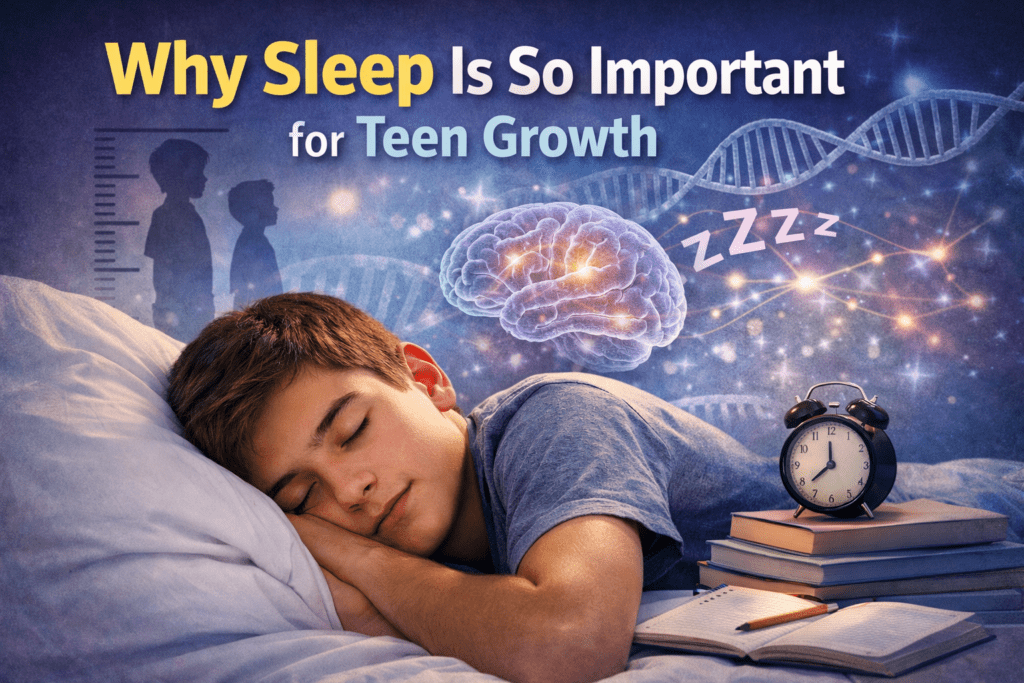
Sleep isn’t just “rest time” for teenagers—it’s active construction time. I like to think of sleep as the night shift where the body puts on a hard hat and gets to work. During the teenage years, the body and brain grow faster than at almost any other stage of life. Bones lengthen, muscles develop, hormones fluctuate, and the brain rewires itself. None of this happens properly without enough quality sleep.
Teenagers need sleep not because they’re lazy, but because their bodies are incredibly busy growing. When sleep is cut short, growth doesn’t stop—but it slows, stumbles, and sometimes misfires. From physical height to emotional maturity, sleep acts like fuel. Without it, teens run on empty.
In today’s world of late-night scrolling, school pressure, and packed schedules, sleep often gets pushed aside. But skipping sleep is like skipping meals during a growth spurt—it shows sooner or later. Understanding why sleep matters so much can help teens and parents treat it as a priority, not a luxury.
Understanding Teen Growth and Development

Teen growth isn’t just about getting taller. It’s a full-body upgrade. During adolescence, teens experience rapid changes in bones, muscles, organs, and especially the brain. This is also when lifelong patterns—physical and mental—are being set. Sleep plays a central role in guiding this growth smoothly.
I often compare teen development to renovating a house while still living in it. Everything is changing at once, and sleep is when most of the construction happens quietly behind the scenes. Cells repair, tissues grow, and neural connections strengthen. Without enough sleep, this renovation gets messy.
Teenagers also go through emotional and social growth. They’re learning how to manage stress, relationships, and responsibilities. Sleep supports this by stabilizing mood and sharpening thinking skills. When sleep is lacking, teens may feel overwhelmed, irritable, or unmotivated—not because of attitude, but biology.
Growth during adolescence is intense and demanding. Sleep isn’t optional here; it’s essential scaffolding that holds the whole process together.
What Happens to the Body During Sleep?
Sleep looks passive, but the body is anything but idle. Once a teen falls asleep, their body enters different sleep stages, each with a specific job. Deep sleep is especially important for growth, as this is when the body focuses on repair and rebuilding.
During these stages, muscles recover, tissues regenerate, and the immune system strengthens. Think of sleep as a nightly tune-up. Without it, wear and tear builds up quickly. For growing teens, this can mean slower recovery from sports, frequent illness, or constant fatigue.
The brain is also busy during sleep. It organizes memories, clears out waste, and strengthens learning pathways. That’s why a good night’s sleep can make problem-solving feel easier the next day.
In short, sleep is when the body presses “save” on growth and development. Miss too much of it, and progress doesn’t fully stick.
Why Teenagers Need More Sleep Than Adults?
Teenagers aren’t just smaller adults—they have different biological needs. Most teens require 8–10 hours of sleep per night, more than many adults. This is because their bodies and brains are still under heavy construction.
One major reason is the shift in the teen circadian rhythm. Teens naturally feel alert later at night and sleepy later in the morning. This isn’t rebellion—it’s biology. Unfortunately, early school start times often clash with this natural rhythm.
On top of that, teens burn more mental and physical energy daily. Between school, social life, sports, and emotional growth, their systems need more recovery time. Sleep provides that reset.
When teens don’t get enough sleep, it’s like asking a phone to run all day on 20% battery. It might work, but performance drops fast.
The Role of Sleep in Physical Growth
Growth Hormone Release
Here’s a big one: growth hormone is primarily released during deep sleep. This hormone is responsible for increasing height, building muscle, and repairing tissues. If sleep is shortened or poor in quality, growth hormone release drops.
That means less efficient physical growth. Teens who consistently miss sleep may not reach their full growth potential. It also affects muscle development and recovery, especially for active teens.
Sleep supports bone density, posture, and overall physical strength. It’s like pouring concrete—you need the right conditions, and sleep provides them.
Simply put, no sleep equals no optimal growth. For teens chasing height, strength, or athletic performance, sleep is non-negotiable.
Sleep and Brain Development in Teenagers

The teen brain is a work in progress, especially the prefrontal cortex—the part responsible for decision-making, focus, and impulse control. Sleep helps this area mature properly.
During sleep, the brain strengthens useful connections and prunes unnecessary ones. This process improves learning, creativity, and emotional control. Without sleep, this cleanup doesn’t happen well.
That’s why sleep-deprived teens may struggle with attention, memory, and judgment. It’s not lack of effort—it’s lack of rest.
Sleep literally shapes the teen brain. Think of it as the software update that makes everything run smoother.
Hormones, Puberty, and Sleep Connection
Puberty is powered by hormones, and sleep keeps those hormones balanced. Melatonin, cortisol, and growth hormones all depend on healthy sleep cycles.
When teens stay up late or sleep irregularly, hormone production can get out of sync. This may affect mood, appetite, skin health, and even growth patterns.
Sleep also helps regulate stress hormones. Without enough rest, teens may feel constantly “on edge,” even without obvious stressors.
Good sleep acts like a hormone stabilizer, helping puberty progress more smoothly and comfortably.
Sleep’s Impact on Mental Health in Teens
Sleep and mental health are tightly connected. Poor sleep increases the risk of anxiety, depression, and mood swings in teenagers.
When sleep is short, the brain struggles to manage emotions. Small problems feel huge, and stress feels overwhelming. With enough sleep, teens are more resilient and emotionally balanced.
I often say sleep is emotional armor. It doesn’t prevent stress, but it helps teens handle it better.
Protecting sleep is one of the simplest, most powerful ways to support teen mental health.
Academic Performance and Sleep Quality
Sleep is a secret academic weapon. During sleep, the brain consolidates learning—turning today’s lessons into tomorrow’s knowledge.
Teens who sleep well tend to have better focus, memory, and problem-solving skills. Lack of sleep leads to brain fog, slower thinking, and careless mistakes.
Pulling all-nighters might seem productive, but it usually backfires. Sleep helps information stick.
If grades matter, sleep should too.
Sleep and Emotional Regulation in Teen Life
Teen emotions already run high, and sleep loss turns the volume up even more. Sleep helps the brain regulate emotional responses.
With enough sleep, teens are better at handling frustration, conflict, and disappointment. Without it, emotions swing harder and faster.
Sleep doesn’t erase feelings—it helps manage them. It’s like having shock absorbers on a bumpy road.
How Lack of Sleep Affects Teen Behavior
Sleep-deprived teens may seem lazy, irritable, or unmotivated. In reality, their brains are exhausted.
Lack of sleep increases impulsivity, risk-taking, and poor decision-making. It can also look like defiance or attitude issues.
Understanding this helps parents respond with support instead of punishment.
Technology, Screen Time, and Sleep Problems
Screens are sleep’s biggest enemy. Blue light delays melatonin release, making it harder to fall asleep.
Late-night scrolling also keeps the brain alert when it should be winding down. Setting screen limits before bed can dramatically improve sleep quality.
Think of screens as caffeine for the eyes—best avoided at night.
Common Sleep Disorders in Teenagers
- Teens can experience insomnia, delayed sleep phase syndrome, and sleep anxiety. These issues often go unnoticed.
- Warning signs include constant fatigue, trouble waking up, and mood changes. Early support makes a big difference.
- Sleep problems aren’t laziness—they’re health issues.
Healthy Sleep Habits for Growing Teens
Consistent bedtimes, a calm bedtime routine, and a dark, quiet room matter. Sleep thrives on routine.
Even small changes—like reducing caffeine or keeping phones out of bed—can improve sleep fast.
Good habits today build strong bodies tomorrow.
How Parents Can Support Better Teen Sleep
Parents can help by respecting sleep needs, setting boundaries, and modeling good habits.
Support beats control. Conversations work better than commands.
A sleep-friendly home is a growth-friendly home.
Long-Term Effects of Poor Sleep During Teenage Years
Chronic sleep deprivation can affect growth, mental health, and long-term wellbeing. Habits formed in teen years often stick for life.
Prioritizing sleep now protects future health.
Sleep is an investment that pays interest for decades.
Conclusion
Sleep is the foundation of teen growth—physically, mentally, and emotionally. It’s not wasted time; it’s essential work. When teens sleep well, they grow better, think clearer, and feel stronger. If there’s one habit worth protecting during adolescence, sleep is it.
FAQs
1. How many hours of sleep do teenagers really need?
Most teens need 8–10 hours per night for healthy growth.
2. Can lack of sleep stunt teen growth?
Yes, chronic sleep loss can reduce growth hormone release.
3. Why do teens stay up late naturally?
Their biological clock shifts during puberty.
4. Does sleeping more improve school performance?
Absolutely. Sleep improves memory, focus, and learning.
5. How can teens fall asleep faster?
Limit screens, keep routines, and create a calm sleep environment.