
Helping a child focus on studies is something almost every parent struggles with. One day they’re attentive, the next day they can’t sit still for five minutes.
Here’s the thing. Lack of focus is not laziness. It’s usually a mix of environment, habits, energy levels, and how learning feels to the child.
At TheMomAndKids, we believe focus is not forced. It’s built step by step.
Let’s break it down in a way that actually works.
Why Children Struggle to Focus on Studies

Before fixing focus, you need to understand what’s getting in the way.
Most kids lose concentration because of:
- Too many distractions (phones, TV, noise)
- Long study sessions without breaks
- Boring or difficult subjects
- Lack of routine
- Poor sleep or nutrition
- No clear goals
What this really means is this: your child is not the problem. The system around them needs adjustment.
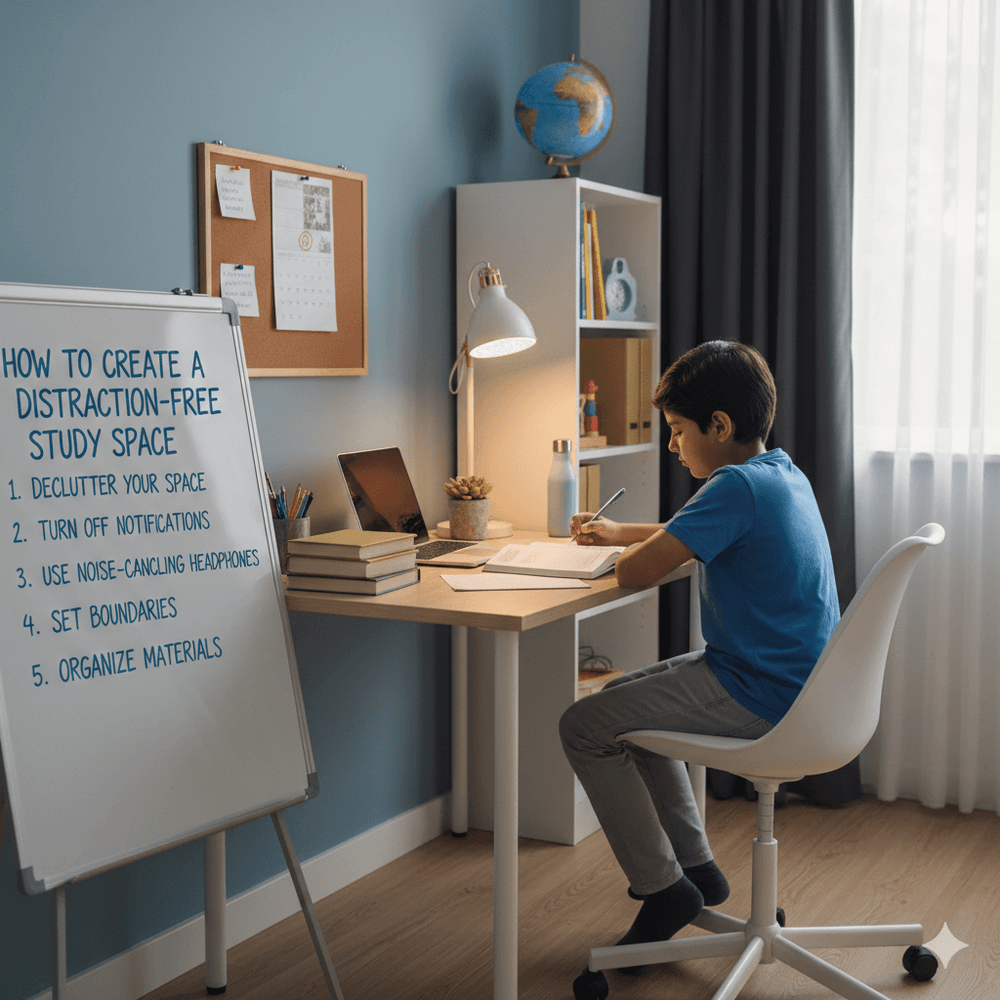
Create a Distraction-Free Study Environment
Focus starts with the environment.
If your child is studying in a noisy room with screens around, their brain will naturally shift attention.
What works:
- A quiet, clean study space
- Good lighting and comfortable seating
- No TV or mobile distractions
- Keep only necessary books on the desk
Even a small dedicated corner can make a big difference.
Set a Fixed Study Routine
Children focus better when they know what to expect.
Instead of random study times, create a simple daily routine.
Example:
- After school: rest + snack
- 1 hour study
- Break
- Short revision
Consistency trains the brain. Over time, your child will naturally get into “study mode” at that time.
Use Short Study Sessions (The 25-Minute Rule)
Long study hours don’t equal better focus.
Children focus best in short bursts.
Try this:
- 20–25 minutes study
- 5-minute break
- Repeat
This method keeps the brain fresh and reduces frustration.
Break Big Tasks into Small Steps
A big chapter feels overwhelming. That’s where focus breaks down.
Instead of saying:
“Finish this whole chapter”
Say:
“Let’s complete 2 pages first”
Small wins build momentum. Momentum builds focus.
Make Learning More Engaging
If studying feels boring, focus disappears.
Try to make learning interactive:
- Use colors, charts, or diagrams
- Watch short educational videos
- Use real-life examples
- Turn lessons into small quizzes
Children focus longer when they are interested, not forced.
Remove Pressure, Build Motivation
Constant pressure like:
“Study more”
“Get good grades”
“Don’t waste time”
…can actually reduce focus.
Instead, shift your approach.
Say things like:
- “Let’s try together”
- “You’re improving”
- “Good effort”
Encouragement builds confidence. Confidence improves concentration.
Ensure Proper Sleep and Nutrition
A tired child cannot focus. It’s that simple.
Focus basics:
- 8–10 hours of sleep
- Healthy meals (not just junk food)
- Enough water
Low energy often looks like “lack of focus,” but it’s actually physical.
Limit Screen Time
Too much screen time reduces attention span.
Fast-moving content trains the brain to expect constant stimulation. Studying feels slow in comparison.
Set simple rules:
- No screens during study time
- Limit daily screen hours
- Keep devices away from the study area
This alone can improve focus noticeably.
Use a Reward System (But Keep It Simple)
Rewards can motivate, but don’t overdo it.
Example:
- Finish homework → extra playtime
- Complete study goal → favorite snack
Keep rewards small and consistent. The goal is to build habits, not dependency.
Teach Your Child to Set Small Goals
Focus improves when there is a clear target.
Instead of vague tasks, set clear goals like:
- “Finish 5 math problems”
- “Read 3 pages”
- “Revise one topic”
Achieving goals gives a sense of progress. That keeps children engaged.
Study Together (At Least Sometimes)
You don’t need to sit all the time, but occasional support helps.
Sit beside them for a few minutes. Guide them if needed. Show interest.
Your presence alone can improve their attention and confidence.
Allow Breaks Without Guilt
Breaks are not a waste of time. They are necessary.
Let your child:
- Stretch
- Walk around
- Drink water
- Relax briefly
A refreshed brain focuses better than an exhausted one.
Avoid Comparing with Other Children
Comparison kills motivation.
Every child learns at a different pace.
Instead of:
“Look at others, they study more”
Say:
“Let’s improve your progress step by step”
Focus on growth, not competition.
Watch for Learning Difficulties
Sometimes focus issues are deeper.
If your child:
- Struggles constantly
- Avoids studies completely
- Gets frustrated easily
There may be learning challenges.
In that case, support from teachers or professionals can help.
Proven Tips to Improve Study Focus
Let’s simplify everything:
1. Fix the environment
Quiet space = better focus
2. Build a routine
Same time daily = habit
3. Keep sessions short
20–25 minutes works best
4. Make learning interesting
Engagement beats pressure
5. Support, don’t stress
Confidence improves focus
6. Prioritize sleep
Tired brain = no concentration
7. Reduce distractions
Less screen = more attention
Final Thoughts
Helping your child focus on studies is not about strict rules or long hours.
It’s about creating the right environment, building simple habits, and supporting them in a calm way.
At TheMomAndKids, we believe small daily improvements lead to big long-term results.
Some days will go well. Some won’t. That’s normal.
Stay consistent. Stay patient. Focus will follow.