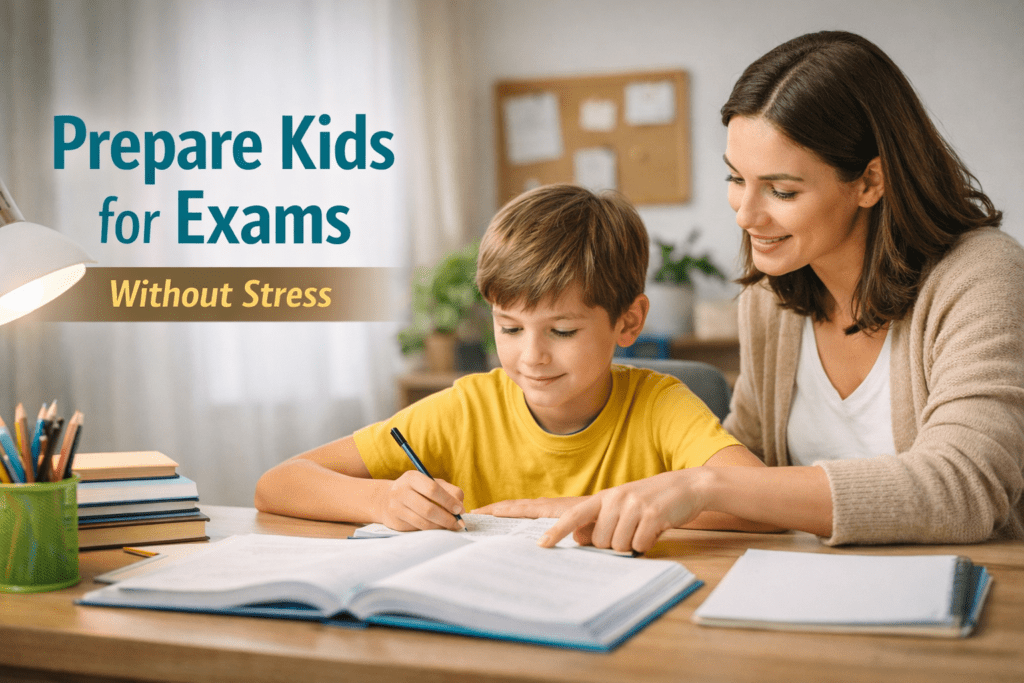
Exams can make children nervous, frustrated, or emotionally tired. Many parents want to help, but sometimes the pressure around studying makes things worse instead of better.
Here’s the thing. Exam preparation does not have to feel scary. With the right routine, support, and mindset, children can prepare well without feeling overwhelmed.
At TheMomAndKids, we believe kids do better when learning feels structured, calm, and manageable.
Let’s break down how to prepare kids for exams without stress in a practical way.
Why Exams Feel Stressful for Kids

Children usually do not fear exams only because of the test itself. They feel stress because of everything around it.
Common reasons include:
- Fear of failure
- Pressure from parents or school
- Poor time management
- Too much syllabus left at the last minute
- Comparing themselves with others
- Lack of confidence
What this really means is this: exam stress often grows when preparation feels confusing, rushed, or full of pressure.
Start Preparation Early
One of the best ways to reduce exam stress is to avoid last-minute study.
When children start early, they have more time to understand lessons, revise properly, and ask questions. This makes learning feel lighter and more controlled.
Instead of waiting until a few days before the exam, help your child review a little every day.
Even 30 to 45 minutes of focused study each day can make a huge difference over time.
Create a Simple Study Plan
A clear study plan helps children know what to do and when to do it. Without a plan, exams feel big and messy.
Make a simple routine that includes:
- Subjects to study each day
- Time for revision
- Short breaks
- Relaxation time
- Sleep schedule
Do not overload the timetable. Kids need a plan they can actually follow.
Example:
- 4:00 PM: Snack and rest
- 4:30 PM: Math revision
- 5:00 PM: Break
- 5:15 PM: English reading
- 5:45 PM: Quick recap
A calm plan reduces panic.
Focus on Understanding, Not Just Memorizing
A lot of children get stressed because they try to memorize everything without understanding the lesson.
Help your child focus on meaning first.
Ask simple questions like:
- What is this chapter about?
- Can you explain it in your own words?
- What is the main idea?
When children understand a topic, remembering becomes much easier. This builds confidence before exams.
Break Study Time Into Small Sessions
Long study hours can make children tired and unfocused. Short study sessions work better.
Try this method:
- 25 minutes study
- 5 minutes break
- Then continue with the next task
This keeps the brain active without making study time feel too heavy.
Small sessions are especially helpful for younger children who cannot focus for very long.
Avoid Putting Too Much Pressure on Marks
This is one of the biggest reasons exam stress grows.
If children only hear things like:
- “You must get the highest marks”
- “Do not make mistakes”
- “You have to do better than others”
They may start fearing the exam instead of preparing for it.
Try replacing pressure with support.
Say things like:
- “Do your best”
- “I care about your effort too”
- “We will prepare step by step”
This helps children feel safe, not judged.
Make Revision Easy and Organized
Revision should feel simple, not chaotic.
Use tools that help your child review faster:
- Short notes
- Highlighted key points
- Flashcards
- Practice questions
- Summary sheets
- Diagrams and charts
When study material is neat and easy to review, children feel more in control.
Practice With Mock Tests
Mock tests are a great way to reduce fear before the real exam.
They help children:
- Understand question patterns
- Improve time management
- Get used to exam pressure
- Find weak areas early
Keep practice tests calm. Do not turn them into punishment.
After the test, review mistakes gently and focus on improvement.
Keep the Home Environment Calm
Children often absorb the mood around them.
If the home feels tense, loud, or full of stress, children may struggle to stay calm during exam time.
Try to create a peaceful environment by:
- Reducing unnecessary distractions
- Keeping routines stable
- Speaking in a calm tone
- Avoiding arguments around them during exam days
A calm home helps a child feel emotionally safe.
Give Healthy Food and Enough Water
Good nutrition matters during exam preparation.
Children need energy to focus, remember, and stay active.
Try to include:
- Fruits
- Vegetables
- Eggs
- Nuts
- Milk or yogurt
- Plenty of water
Avoid too much junk food, sugary snacks, or heavy meals before study time. These can affect concentration and mood.
Sleep Is Part of Exam Preparation
Many parents focus only on study hours and forget one important thing: sleep.
A tired brain cannot learn well. It also forgets faster.
Make sure your child gets enough sleep, especially before the exam.
Good sleep helps with:
- Memory
- Focus
- Emotional balance
- Confidence
Late-night cramming usually creates more stress than success.
Encourage Breaks and Play Time
Children should not spend the whole day studying.
Short breaks help the brain rest and reset. Play time also reduces stress and improves mood.
Let your child:
- Walk around
- Stretch
- Talk with family
- Play for a short time
- Listen to something relaxing
Breaks are not wasting time. They help children return to study with better focus.
Teach Positive Self-Talk
Some children become anxious because they keep thinking:
- “I can’t do this”
- “I will forget everything”
- “I am not good enough”
Help them replace these thoughts with healthier ones:
- “I am preparing well”
- “I can improve with practice”
- “I will do my best”
- “One exam does not define me”
Positive self-talk builds confidence and lowers stress.
Do Not Compare Your Child With Others
Comparison creates pressure and hurts motivation.
Avoid saying things like:
- “Your friend studies more than you”
- “Look how well others are doing”
Every child learns differently. Some need more time, some need different study styles.
Focus on your child’s own growth, not someone else’s results.
Help With Weak Subjects Gently
If your child struggles with one subject, that subject may become the biggest source of stress.
Do not shame them for it.
Instead:
- Identify the difficult topic
- Break it into smaller parts
- Practice slowly
- Get help from a teacher if needed
A little extra support can turn fear into progress.
Talk About Exams in a Healthy Way
Children often feel better when parents speak about exams as something manageable, not terrifying.
Use a calm tone when discussing upcoming tests. Remind them that exams are only one part of learning.
You can say:
- “This is your chance to show what you’ve learned”
- “Preparation matters more than panic”
- “You do not need to be perfect”
This changes the emotional meaning of exams.
On the Day Before the Exam
The day before the exam should be light and organized.
Help your child:
- Review key points only
- Avoid learning totally new chapters
- Pack needed materials
- Sleep on time
- Eat well
- Stay calm
Do not overload the last day with too much pressure. The goal is confidence, not panic.
On Exam Day
Exam day should feel steady, not rushed.
Make sure your child:
- Wakes up on time
- Eats a light, healthy meal
- Carries necessary items
- Leaves home early
- Hears encouraging words, not pressure
A simple message like “Stay calm and do your best” is more helpful than a long lecture.
Signs Your Child May Be Too Stressed
Sometimes exam stress becomes too much.
Watch for signs like:
- Trouble sleeping
- Loss of appetite
- Crying easily
- Headaches or stomach aches
- Irritability
- Avoiding study completely
- Constant fear or self-doubt
If stress feels extreme, it may help to speak with teachers or a child professional for extra support.
Best Tips to Prepare Kids for Exams Without Stress
Let’s simplify the key points.
1. Start early
Small daily study feels easier than last-minute panic.
2. Make a simple plan
A clear routine reduces confusion.
3. Use short study sessions
Kids learn better in focused blocks.
4. Keep expectations healthy
Support effort, not just marks.
5. Prioritize sleep and food
A healthy body supports a healthy mind.
6. Practice calmly
Mock tests and revision build confidence.
7. Protect emotional well-being
A calm child performs better than a pressured child.
Final Thoughts
If you want to prepare kids for exams without stress, the goal is not to remove all challenge. The goal is to make preparation feel clear, balanced, and emotionally safe.
Children do better when they feel supported, not pressured. They need routine, encouragement, rest, and confidence more than fear-based motivation.
At TheMomAndKids, we believe exam success should come with healthy habits, not emotional overload.
Step by step, calm preparation can help your child feel ready and do their best.