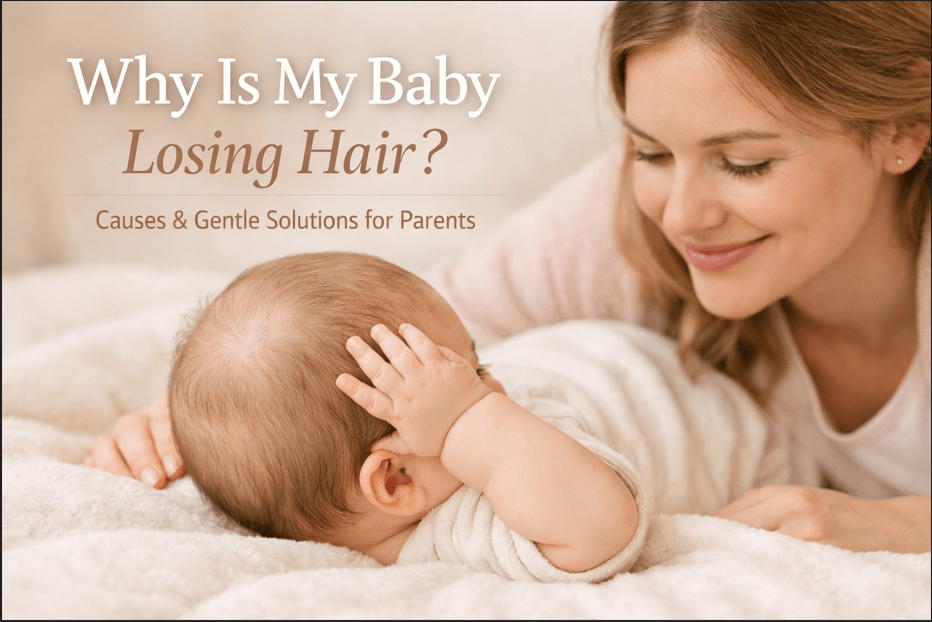
Hair loss in babies can be surprising—and even a little scary—for new parents. You might notice your baby’s soft newborn hair thinning, falling out, or leaving small bald patches. The good news? In most cases, baby hair loss is completely normal and temporary.
In this guide, we’ll explore why babies lose hair, when it’s normal, and what you can do to support healthy hair growth.
Is It Normal for Babies to Lose Hair?

Yes, it’s absolutely normal for babies to lose hair, especially during the first few months of life. Many newborns are born with a full head of hair, only to shed much or all of it shortly after.
This process is part of your baby’s natural development. Just like adults shed hair as part of a growth cycle, babies go through their own early hair cycle changes.
Typically, baby hair loss occurs between 8 to 12 weeks of age, and new hair begins to grow back soon after. The regrown hair may even look different in color or texture.
Common Causes of Baby Hair Loss
Understanding the causes can help you stay calm and know what to expect. Below are the most common reasons babies lose hair.
1. Hormonal Changes After Birth
During pregnancy, babies are exposed to high levels of their mother’s hormones. After birth, these hormone levels suddenly drop, which can trigger hair shedding.
This type of hair loss is similar to postpartum hair loss in mothers and is completely natural.
Key points:
- Happens within the first few months
- Temporary and harmless
- Hair grows back naturally
2. Friction (Sleeping Position)
One of the most common causes of baby hair loss is simple friction. Babies spend a lot of time lying on their backs, which can cause hair to rub off—especially at the back of the head.
This is often called positional hair loss.
Signs include:
- Bald spot at the back of the head
- Hair thinning in areas that touch surfaces
The good news is that once your baby starts sitting up or moving more, the hair usually grows back.
3. Telogen Effluvium (Shedding Phase)
Babies can experience a condition called telogen effluvium, where hair enters a resting phase and falls out.
This is a natural part of the hair growth cycle and is often triggered by hormonal changes after birth.
What to know:
- Temporary condition
- No treatment needed
- Hair regrows within a few months
4. Cradle Cap (Scalp Condition)
Cradle cap is a common condition that causes flaky, yellowish patches on a baby’s scalp. In some cases, it can lead to mild hair loss in affected areas.
Symptoms:
- Oily or crusty scalp
- White or yellow flakes
- Slight hair thinning
It’s harmless and usually clears up on its own with gentle care.
5. Tight Hairstyles or Accessories
If your baby has longer hair and it’s tied tightly (like small ponytails), it can cause stress on hair roots and lead to hair loss, known as traction alopecia.
Avoid:
- Tight hair ties
- Clips pulling on the scalp
6. Nutritional Deficiency (Rare)
In rare cases, hair loss may be linked to nutritional deficiencies, especially if the baby isn’t getting enough essential vitamins or minerals.
However, this is uncommon in infants who are breastfed or formula-fed properly.
When Should You Be Concerned?
Most baby hair loss is harmless, but there are a few situations where you should consult a pediatrician:
- Hair loss continues beyond the first year
- Redness, swelling, or infection on the scalp
- Patchy hair loss with broken hairs (could indicate fungal infection)
- Baby seems unwell or not growing properly
If you notice any of these signs, it’s best to seek medical advice.
Safe and Effective Solutions for Baby Hair Loss
While most cases don’t require treatment, there are simple ways to support your baby’s scalp and encourage healthy hair growth.
1. Be Gentle with Hair Care
Your baby’s scalp is delicate, so always use mild products and gentle techniques.
Tips:
- Use a soft baby brush
- Wash hair with mild baby shampoo 2–3 times a week
- Avoid harsh chemicals
2. Change Sleeping Positions
To reduce friction-related hair loss:
- Alternate your baby’s head position during sleep
- Give supervised tummy time when awake
- Use soft bedding (but always follow safe sleep guidelines)
3. Treat Cradle Cap Gently
If cradle cap is present:
- Apply a small amount of baby oil before bath
- Gently brush flakes with a soft brush
- Wash with a gentle shampoo
Avoid picking or scrubbing harshly.
4. Avoid Tight Hairstyles
Let your baby’s hair stay loose and natural. Avoid styles that pull on the scalp.
5. Ensure Proper Nutrition
If your baby is older and eating solids:
- Include nutrient-rich foods like fruits and vegetables
- Ensure adequate iron and vitamins
For younger babies, breast milk or formula provides all necessary nutrients.
How Long Does It Take for Baby Hair to Grow Back?
Hair regrowth usually starts within a few weeks to months after shedding begins. By the time your baby is 6 to 12 months old, you’ll likely see a fuller head of hair.
Keep in mind:
- New hair may be a different color or texture
- Growth patterns vary from baby to baby
Final Thoughts
Seeing your baby lose hair can be concerning, but in most cases, it’s a completely normal part of early development. Whether it’s due to hormonal changes, friction, or natural hair cycles, baby hair loss is usually temporary and harmless.
With gentle care, patience, and proper attention, your baby’s hair will grow back healthy and strong.
FAQs
1. Do all babies lose their hair?
Not all, but many babies experience some degree of hair loss within the first few months.
2. Can I use oil to prevent hair loss?
You can use light baby oil for scalp care, but it won’t prevent natural shedding.
3. Will my baby’s hair grow back thicker?
It might! Many babies grow back thicker or different-textured hair.
4. Is shaving a baby’s head helpful?
No, shaving does not improve hair growth. Hair thickness is determined by genetics.
5. When should I see a doctor?
If hair loss is severe, prolonged, or accompanied by scalp issues, consult a pediatrician.