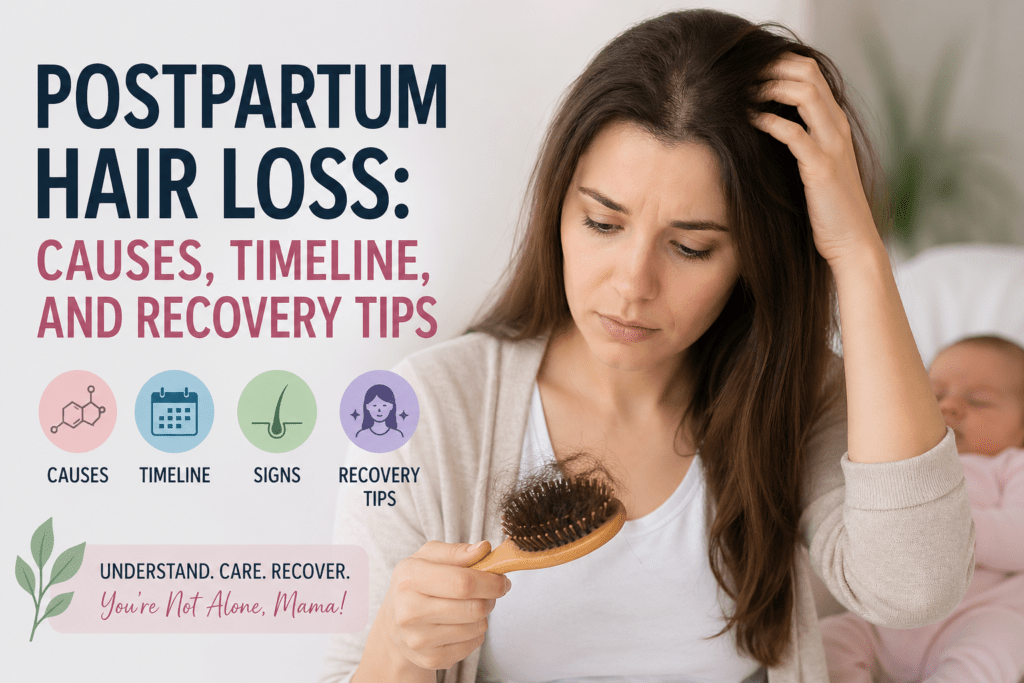
Bringing a baby into the world is a beautiful journey, but it also comes with many unexpected body changes—including postpartum hair loss. If you’ve noticed extra strands in your brush, shower drain, or on your pillow after giving birth, you’re not alone. Postpartum hair loss is a common experience for many new moms and is usually temporary.
During pregnancy, high hormone levels often make hair look thicker, shinier, and fuller than usual. After childbirth, hormone levels drop quickly, causing more hair to enter the shedding phase. This sudden shedding can feel alarming, but in most cases, your hair will gradually return to its normal growth cycle.
In this guide, we’ll explain what causes postpartum hair loss, when it starts, how long it lasts, and practical recovery tips to support healthy hair regrowth.
What Is Postpartum Hair Loss?
Postpartum hair loss, also known as postpartum telogen effluvium, is excessive hair shedding that happens after giving birth. It occurs when a large number of hair follicles shift from the growing phase (anagen) into the resting and shedding phase (telogen).
Normally, we lose around 50–100 hairs a day. With postpartum hair loss, shedding may increase significantly, making your hair seem thinner—especially around the hairline and temples.
The good news? This condition does not cause permanent baldness and usually resolves on its own over time.
What Causes Postpartum Hair Loss?
Several factors can contribute to postpartum shedding:
1. Hormonal Changes
During pregnancy, estrogen levels rise and keep hair in the growth phase longer. After delivery, estrogen levels drop dramatically, causing those “extra” hairs to shed all at once.
2. Physical Stress of Childbirth
Labor and delivery put stress on the body, which can trigger temporary hair shedding.
3. Lack of Sleep and Fatigue
Newborn care often means sleepless nights, and physical exhaustion can impact overall health—including hair growth.
4. Nutritional Deficiencies
Low levels of iron, vitamin D, biotin, zinc, or protein may worsen hair loss after pregnancy.
5. Thyroid Issues
Some women develop postpartum thyroiditis, which can cause hair thinning along with fatigue, weight changes, and mood swings.
When Does Postpartum Hair Loss Start?
Postpartum hair loss usually begins around 2 to 4 months after childbirth.
Many moms are surprised because hair may still seem thick immediately after delivery. Shedding often peaks around 4 months postpartum.
- Often begins around 8–16 weeks postpartum
- Shedding may peak at 4 months
- Usually improves by the baby’s first birthday
- Temporary and part of normal recovery
How Long Does Postpartum Hair Loss Last?
Postpartum hair loss usually lasts between 6 and 12 months after giving birth. For most moms, hair shedding slows down as hormone levels balance and the hair growth cycle returns to normal. In some cases, recovery may take longer, especially if stress or nutrient deficiencies are involved.
- Commonly lasts 6–12 months
- Shedding often peaks around 4 months postpartum
- Hair may return to normal by the baby’s first birthday
- Longer shedding may need medical advice
Signs of Postpartum Hair Loss
Common signs include:
- Excess hair in the shower or hairbrush
- Hair strands on your pillow or clothes
- Thinning around the temples or hairline
- Less overall hair volume
- A wider-looking part line
How to Recover from Postpartum Hair Loss
While you can’t completely stop postpartum shedding, these tips may help support recovery:
1. Eat a Nutrient-Rich Diet
Focus on foods rich in:
- Protein (eggs, fish, lean meat, beans)
- Iron (spinach, red meat, lentils)
- Vitamin D
- Zinc
- Omega-3 fatty acids
2. Continue Taking Prenatal Vitamins
Many doctors recommend continuing prenatal vitamins while breastfeeding.
3. Be Gentle with Your Hair
Avoid:
- Tight ponytails
- Heat styling tools
- Harsh chemical treatments
- Excessive brushing
Use a wide-tooth comb and gentle shampoo.
4. Reduce Stress
Try:
- Short naps
- Meditation
- Light exercise
- Asking for help with baby care
5. Use Volumizing Hair Products
Lightweight shampoos and conditioners can make hair appear fuller.
6. Talk to a Doctor
If shedding continues beyond a year or is severe, consult a doctor to check for thyroid issues or anemia.
Can You Prevent Postpartum Hair Loss?
You can’t fully prevent it because it’s largely hormone-related. However, maintaining a healthy lifestyle may reduce severity. You can’t completely prevent postpartum hair loss because it is mainly caused by hormonal changes after childbirth. However, you can reduce its severity by maintaining a healthy diet, managing stress, and caring for your hair gently during recovery.
- Eat a nutrient-rich diet
- Continue taking prenatal vitamins if advised
- Avoid tight hairstyles and heat styling
- Reduce stress and get enough rest
- Use gentle hair care products
When to Seek Medical Help
See a doctor if you notice:
- Bald patches
- Hair loss lasting longer than 12 months
- Severe fatigue or dizziness
- Sudden weight gain or loss
- Scalp irritation or pain
These may indicate another underlying condition.
Final Thoughts
Postpartum hair loss can be frustrating, especially when you’re already adjusting to life with a newborn. The good news is that it’s temporary and usually part of your body’s natural recovery process.
Be patient with your body, nourish yourself, and treat your hair gently. In time, your hair should regain its normal fullness and growth cycle.
Motherhood comes with many changes—but this one won’t last forever.
FAQs
Is postpartum hair loss normal?
Yes, postpartum hair loss is very common and affects many women after childbirth.
Can breastfeeding cause hair loss?
Breastfeeding itself doesn’t directly cause hair loss, but hormonal changes and nutritional demands may contribute.
Will my hair grow back after postpartum hair loss?
In most cases, yes. Hair usually regrows within 6 to 12 months.
Can I dye my hair during postpartum shedding?
Yes, but it’s best to avoid harsh chemicals if your hair feels weak or brittle.
Does postpartum hair loss happen after every pregnancy?
Not always. It can vary from one pregnancy to another.