Prenatal yoga is one of the best ways for expecting mothers to stay active, reduce stress, improve flexibility, and prepare their bodies for childbirth. When practiced correctly, prenatal yoga can help alleviate common pregnancy discomforts such as back pain, swelling, fatigue, and anxiety. However, many pregnant women unknowingly make mistakes during their yoga practice that can reduce its benefits or even increase the risk of injury.
Whether you are new to prenatal yoga or have previous yoga experience, understanding the most common mistakes can help you enjoy a safer and more effective practice throughout your pregnancy journey. By listening to your body, following pregnancy-specific modifications, and avoiding risky movements, you can maximize the physical and emotional benefits of prenatal yoga.
In this guide, we will explore the most common prenatal yoga mistakes to avoid and share practical tips to help you practice safely during every trimester.
Why Prenatal Yoga Requires Special Attention
Pregnancy causes significant changes in the body, including hormonal fluctuations, weight gain, changes in balance, and increased joint flexibility. The hormone relaxin loosens ligaments and joints to prepare the body for childbirth, making pregnant women more vulnerable to overstretching and injury.
Prenatal yoga is specifically designed to accommodate these changes. Unlike regular yoga classes, prenatal yoga focuses on gentle stretching, breathing exercises, pelvic floor awareness, and relaxation techniques that support both mother and baby.
Understanding the unique needs of your pregnant body is the first step toward avoiding common yoga-related mistakes.
Mistake #1: Practicing Without Medical Clearance
One of the biggest mistakes is beginning prenatal yoga without consulting your healthcare provider.
While prenatal yoga is generally safe, certain pregnancy complications may require modifications or restrictions. Women with conditions such as placenta previa, severe anemia, preeclampsia, or a history of preterm labor should seek medical advice before starting any exercise program.
How to Avoid It:
- Get approval from your doctor or midwife.
- Discuss any pregnancy complications.
- Inform your yoga instructor about your medical history.
Mistake #2: Continuing Advanced Yoga Poses
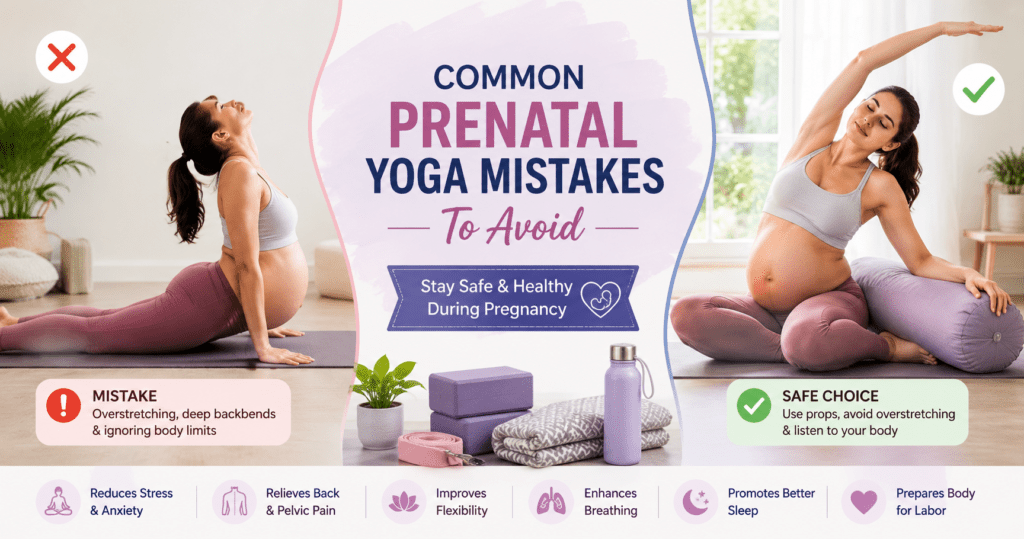
Many women who practiced yoga before pregnancy try to continue advanced poses without modification. However, pregnancy changes your center of gravity and balance, making certain poses unsafe.
Poses that involve deep twists, inversions, intense backbends, or strong abdominal engagement may place unnecessary stress on the body.
How to Avoid It:
- Focus on prenatal-specific yoga classes.
- Use modified versions of familiar poses.
- Prioritize safety over performance.
Mistake #3: Overstretching the Body
Because relaxin increases flexibility during pregnancy, many women mistakenly think they can stretch further than usual.
Unfortunately, overstretching can lead to joint instability, muscle strain, and long-term discomfort.
How to Avoid It:
- Stretch gently and mindfully.
- Avoid pushing to your maximum range of motion.
- Stop immediately if you feel pain.
Mistake #4: Holding the Breath
Breathing is a fundamental component of prenatal yoga. Some women unintentionally hold their breath during challenging poses.
Holding the breath can reduce oxygen flow and increase tension in the body.
How to Avoid It:
- Practice slow, steady breathing.
- Coordinate movement with breath.
- Focus on diaphragmatic breathing techniques.
Mistake #5: Ignoring Body Signals
Pregnancy is not the time to push through discomfort.
Symptoms such as dizziness, shortness of breath, nausea, cramping, or unusual fatigue should never be ignored during yoga practice.
How to Avoid It:
- Rest whenever needed.
- Modify poses based on your energy level.
- Stop exercising and contact your healthcare provider if symptoms persist.
Mistake #6: Lying Flat on the Back for Too Long
After the first trimester, prolonged periods of lying flat on the back may compress major blood vessels and reduce circulation.
This can lead to dizziness, lightheadedness, and discomfort.
How to Avoid It:
- Use pillows or bolsters for support.
- Practice side-lying relaxation poses.
- Follow trimester-specific modifications.
Mistake #7: Skipping Warm-Ups
Jumping directly into yoga poses without warming up can increase the risk of muscle strain and injury.
A proper warm-up helps prepare muscles and joints for movement.
How to Avoid It:
- Begin with gentle stretching.
- Practice breathing exercises.
- Spend a few minutes mobilizing the neck, shoulders, and hips.
Mistake #8: Practicing in Overheated Conditions
Pregnant women are more sensitive to heat, and overheating may pose risks to both mother and baby.
Hot yoga and excessively warm environments should generally be avoided during pregnancy.
How to Avoid It:
- Practice in a cool, well-ventilated room.
- Stay hydrated before, during, and after class.
- Wear breathable clothing.
Mistake #9: Neglecting Hydration
Dehydration can contribute to fatigue, dizziness, headaches, and muscle cramps.
Many pregnant women underestimate their increased fluid needs during exercise.
How to Avoid It:
- Drink water throughout the day.
- Keep a water bottle nearby during yoga sessions.
- Monitor signs of dehydration.
Mistake #10: Comparing Yourself to Others
Every pregnancy is unique. Comparing your flexibility, stamina, or progress to other pregnant women can create unnecessary stress and frustration.
Prenatal yoga is about supporting your individual journey, not achieving perfect poses.
How to Avoid It:
- Focus on your own comfort and well-being.
- Celebrate small achievements.
- Practice self-compassion.
Benefits of Practicing Prenatal Yoga Safely
When performed correctly, prenatal yoga offers numerous benefits:
- Improves flexibility and posture
- Reduces back and pelvic pain
- Enhances circulation
- Promotes better sleep
- Lowers stress and anxiety
- Strengthens muscles needed for labor
- Encourages relaxation and mindfulness
- Supports emotional well-being
Safe prenatal yoga can help mothers feel more confident, comfortable, and prepared for childbirth.
Final Thoughts
Prenatal yoga can be a wonderful tool for supporting a healthy pregnancy, but safety should always come first. Avoiding common mistakes such as overstretching, holding your breath, practicing advanced poses, or ignoring body signals can help you enjoy all the benefits while protecting both you and your baby.
Remember that pregnancy is a time to nurture your body rather than challenge it. By listening to your body, following professional guidance, and practicing with awareness, you can create a positive prenatal yoga experience that supports your physical and emotional well-being throughout every stage of pregnancy.
Frequently Asked Questions (FAQs)
Is prenatal yoga safe during all trimesters?
Yes, prenatal yoga is generally safe throughout pregnancy when approved by your healthcare provider and practiced with proper modifications.
Can beginners do prenatal yoga?
Absolutely. Many prenatal yoga classes are designed specifically for beginners and focus on gentle movements.
What yoga poses should pregnant women avoid?
Deep twists, intense backbends, strong abdominal exercises, and poses that compromise balance should generally be modified or avoided.
How often should I practice prenatal yoga?
Most experts recommend practicing 2–5 times per week, depending on your fitness level and healthcare provider’s advice.
When should I stop a prenatal yoga session?
Stop immediately if you experience dizziness, bleeding, contractions, severe pain, shortness of breath, or any unusual symptoms.