Pregnancy is an exciting and life-changing journey, but it can also bring emotional challenges. Hormonal changes, physical discomfort, concerns about childbirth, and the anticipation of becoming a parent can all contribute to stress and anxiety during pregnancy. While occasional worry is normal, prolonged stress can affect both the mother’s well-being and the baby’s development.
Many expecting mothers are turning to prenatal yoga as a natural way to manage pregnancy-related stress and anxiety. Combining gentle movement, mindful breathing, relaxation techniques, and meditation, prenatal yoga offers a holistic approach to supporting mental and emotional health throughout pregnancy.
But can yoga really reduce pregnancy stress and anxiety? The answer is yes. Numerous studies and health professionals support the use of prenatal yoga as a safe and effective tool for improving emotional well-being during pregnancy.
In this guide, we’ll explore how prenatal yoga helps reduce stress, the science behind its benefits, and the best yoga practices for a calmer, healthier pregnancy.
Understanding Pregnancy Stress and Anxiety
Pregnancy brings significant physical and emotional changes. While these changes are natural, they can sometimes trigger feelings of overwhelm, worry, and uncertainty.
Common causes of pregnancy stress include:
- Fear of labor and delivery
- Concerns about the baby’s health
- Financial responsibilities
- Changes in relationships
- Sleep disturbances
- Physical discomfort and fatigue
- Balancing work and family responsibilities
If left unmanaged, chronic stress may affect sleep quality, blood pressure, mood, and overall health. This is why finding healthy coping strategies is essential.
How Prenatal Yoga Helps Reduce Stress and Anxiety
Prenatal yoga focuses on the connection between the mind and body. Through gentle movements and conscious breathing, it encourages relaxation and emotional balance.
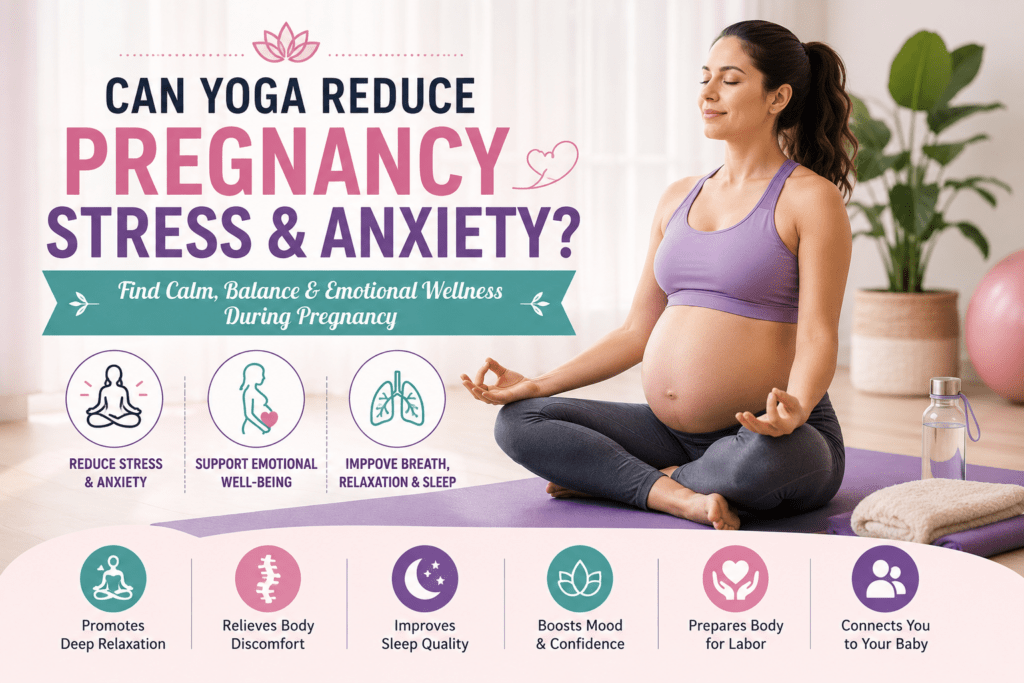
1. Promotes Deep Relaxation
One of the most effective aspects of prenatal yoga is relaxation training.
Many classes end with guided relaxation or meditation sessions that help calm the nervous system and reduce mental tension.
Benefits include:
- Reduced muscle tension
- Lower heart rate
- Improved mood
- Better emotional regulation
Regular relaxation practices help expecting mothers feel more centered and calm throughout the day.
2. Encourages Mindful Breathing
Breathing exercises are a core component of prenatal yoga.
When people feel anxious, their breathing often becomes shallow and rapid. Prenatal yoga teaches controlled breathing techniques that help activate the body’s relaxation response.
Breathing exercises can:
- Lower stress hormones
- Improve oxygen flow
- Reduce feelings of panic
- Enhance focus and mental clarity
These breathing skills can also be valuable during labor and delivery.
3. Reduces Physical Discomfort
Physical discomfort can significantly contribute to emotional stress during pregnancy.
Prenatal yoga helps relieve:
- Lower back pain
- Hip discomfort
- Neck tension
- Swollen legs and feet
- Muscle stiffness
When the body feels better, the mind often follows. Reduced physical pain can lead to a more positive emotional state.
4. Improves Sleep Quality
Sleep disturbances are common during pregnancy and can worsen anxiety.
Prenatal yoga helps prepare the body and mind for restful sleep by reducing physical tension and calming racing thoughts.
Women who practice yoga regularly often report:
- Falling asleep faster
- Fewer nighttime awakenings
- Better overall sleep quality
Improved sleep can significantly enhance emotional resilience.
5. Supports Emotional Well-Being
Yoga encourages mindfulness, helping mothers stay present rather than focusing on future worries.
Mindfulness can help:
- Reduce negative thought patterns
- Increase self-awareness
- Improve emotional balance
- Strengthen coping skills
This mental shift can make pregnancy feel more manageable and enjoyable.
Scientific Research on Yoga and Pregnancy Stress
Research consistently shows positive results for prenatal yoga.
Studies have found that pregnant women who participate in regular yoga programs often experience:
- Lower anxiety levels
- Reduced symptoms of depression
- Improved stress management
- Better sleep quality
- Increased feelings of well-being
Healthcare professionals increasingly recommend prenatal yoga as part of a comprehensive prenatal wellness plan.
Best Prenatal Yoga Practices for Stress Relief
Gentle Stretching
Gentle poses help release physical tension while improving circulation and flexibility.
Examples include:
- Cat-Cow Stretch
- Butterfly Pose
- Child’s Pose (modified)
- Seated Side Stretch
Breathing Exercises
Simple breathing practices can quickly calm the mind.
Popular techniques include:
- Deep Belly Breathing
- Alternate Nostril Breathing
- Slow Rhythmic Breathing
Always practice breathing exercises under proper guidance during pregnancy.
Meditation
Even five to ten minutes of meditation can significantly reduce stress levels.
Meditation helps:
- Quiet mental chatter
- Improve focus
- Increase feelings of peace
Guided Relaxation
Guided relaxation sessions encourage complete physical and mental rest.
Many prenatal yoga classes incorporate relaxation at the end of practice to maximize stress relief.
Additional Benefits of Prenatal Yoga
Beyond reducing stress and anxiety, prenatal yoga may also help:
- Improve posture
- Increase flexibility
- Enhance circulation
- Build strength for labor
- Improve body awareness
- Encourage healthy weight management
- Boost confidence before childbirth
These benefits contribute to a healthier and more positive pregnancy experience.
Safety Tips for Practicing Prenatal Yoga
To ensure a safe experience:
- Consult your healthcare provider before starting.
- Choose classes specifically designed for pregnancy.
- Avoid overheating.
- Stay hydrated.
- Listen to your body’s signals.
- Avoid deep twists and intense abdominal exercises.
- Use props for support when needed.
Safety should always be the top priority during pregnancy.
Final Thoughts
So, can yoga reduce pregnancy stress and anxiety? Absolutely. Prenatal yoga offers a powerful combination of movement, breathing, mindfulness, and relaxation that supports emotional well-being throughout pregnancy.
By helping mothers manage stress, improve sleep, reduce discomfort, and cultivate mindfulness, prenatal yoga creates a strong foundation for a healthier and more enjoyable pregnancy journey. Whether you’re a beginner or an experienced yogi, incorporating prenatal yoga into your routine can provide valuable tools for navigating pregnancy with greater confidence, calmness, and balance.
Frequently Asked Questions (FAQs)
Is prenatal yoga safe for anxiety during pregnancy?
Yes. Prenatal yoga is generally considered a safe and effective way to reduce pregnancy-related stress and anxiety when practiced appropriately.
How often should I practice prenatal yoga for stress relief?
Many experts recommend practicing 2–5 times per week, depending on your fitness level and healthcare provider’s advice.
Can yoga replace medical treatment for anxiety?
No. Yoga can complement professional care but should not replace medical advice or treatment when needed.
Which yoga poses are best for reducing pregnancy stress?
Gentle poses such as Cat-Cow, Butterfly Pose, Child’s Pose (modified), and seated stretches are commonly recommended.
When should I avoid prenatal yoga?
Consult your healthcare provider if you have pregnancy complications, severe pain, bleeding, dizziness, or other medical concerns.