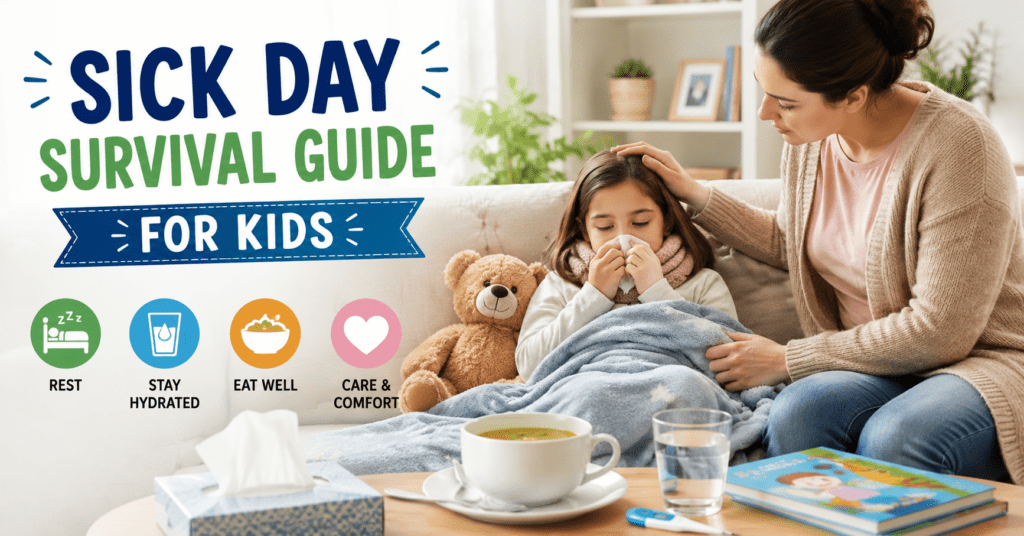
When your child wakes up feeling unwell, it can turn a normal day into a stressful one for the whole family. Whether it’s a common cold, mild flu, stomach bug, or seasonal illness, knowing how to care for your child at home can make a big difference in their comfort and recovery.
This sick day survival guide for kids covers practical tips to help your little one feel better, stay hydrated, rest properly, and recover safely.
Common Signs Your Child May Be Sick
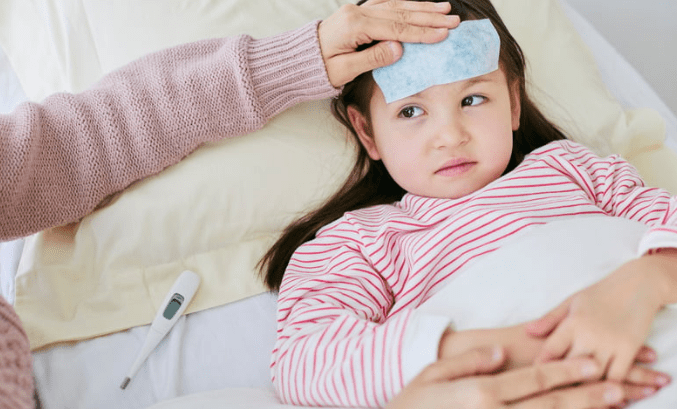
Children often show different symptoms depending on the illness. Common signs include:
- Fever
- Runny or stuffy nose
- Cough
- Sore throat
- Fatigue or unusual sleepiness
- Headache
- Upset stomach
- Vomiting or diarrhea
- Loss of appetite
- Irritability or fussiness
Most minor illnesses can be managed at home with proper care and monitoring.
1. Prioritize Rest
Rest is one of the most important parts of recovery. When children are sick, their bodies need extra energy to fight infection.
Tips for Better Rest:
- Create a quiet and comfortable environment.
- Allow extra naps during the day.
- Limit screen time if it interferes with sleep.
- Use comfortable bedding and pajamas.
- Keep the room at a comfortable temperature.
Don’t worry if your child sleeps more than usual—this is often a normal part of the healing process.
2. Keep Your Child Hydrated
Dehydration is a common concern when children are sick, especially if they have a fever, vomiting, or diarrhea.
Encourage Fluids Such As:
- Water
- Oral rehydration solutions
- Clear soups or broths
- Diluted fruit juice
- Ice pops
- Milk (if tolerated)
Signs of Dehydration:
- Dry lips and mouth
- Fewer wet diapers or bathroom visits
- Sunken eyes
- Lack of tears when crying
- Extreme tiredness
Offer small sips frequently if your child refuses larger amounts.
3. Offer Easy-to-Digest Foods
Many children lose their appetite when they are sick. Instead of forcing meals, offer small portions of nutritious foods.
Good Sick-Day Foods:
- Bananas
- Applesauce
- Rice
- Toast
- Crackers
- Oatmeal
- Yogurt
- Chicken soup
- Mashed potatoes
Let your child eat when hungry and focus on hydration if appetite is low.
4. Manage Fever Safely
Fever is the body’s natural response to infection and is not always dangerous.
To Help a Child With Fever:
- Dress them in lightweight clothing.
- Offer plenty of fluids.
- Encourage rest.
- Use fever-reducing medication only as directed by your healthcare provider.
Never give medication intended for adults without medical advice.
Seek Medical Advice If:
- Fever persists for several days.
- Your child appears unusually lethargic.
- The fever is accompanied by breathing difficulties.
- Your child is very young and develops a fever.
5. Relieve Cold and Flu Symptoms
Colds and flu are among the most common childhood illnesses.
Helpful Home Remedies:
- Use a cool-mist humidifier.
- Encourage warm fluids.
- Saline nasal drops can help with congestion.
- Honey may soothe a cough for children over one year old.
- Elevate the head slightly during sleep if appropriate.
Avoid over-the-counter cold medicines unless recommended by a healthcare professional.
6. Create a Comfort Corner
A comfortable environment can help your child feel more secure and relaxed.
Include:
- Favorite blanket or stuffed toy
- Books and coloring activities
- Soft lighting
- Easy access to water and tissues
Small comforts can make sick days less stressful and more manageable.
7. Maintain Good Hygiene
Prevent illness from spreading to other family members.
Healthy Habits:
- Wash hands frequently.
- Disinfect frequently touched surfaces.
- Dispose of used tissues promptly.
- Avoid sharing cups, utensils, and towels.
- Teach proper cough and sneeze etiquette.
Good hygiene helps protect everyone in the household.
8. Monitor Symptoms Closely
Keep track of how your child is feeling throughout the day.
Watch for:
- Changes in breathing
- Persistent high fever
- Severe dehydration
- Extreme fatigue
- Unusual behavior
- Symptoms that worsen instead of improve
Keeping notes can help healthcare providers if medical attention becomes necessary.
Fun Activities for Sick Kids
While rest is important, gentle activities can help keep children entertained.
Quiet Sick-Day Activities:
- Reading books
- Coloring
- Puzzle games
- Audiobooks
- Simple crafts
- Watching favorite movies
- Listening to music
Choose low-energy activities that allow your child to relax.
When to Contact a Doctor
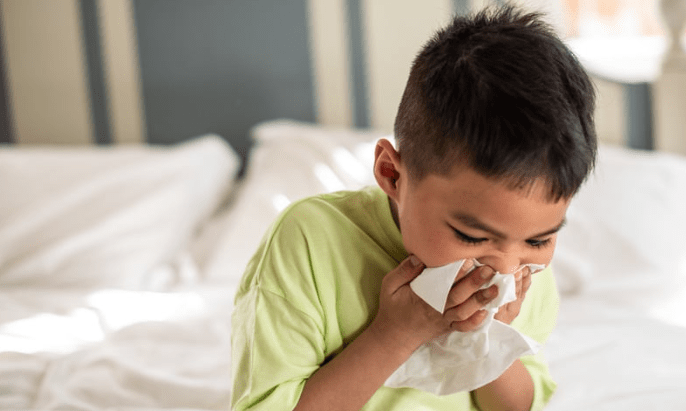
Seek professional medical advice if your child experiences:
- Difficulty breathing
- Severe dehydration
- Persistent vomiting
- High fever that does not improve
- Unusual drowsiness or confusion
- Severe pain
- Symptoms lasting longer than expected
Trust your instincts—if something doesn’t seem right, contact a healthcare professional.
Tips for Parents
Caring for a sick child can be exhausting. Remember to:
- Stay calm and reassuring.
- Get rest whenever possible.
- Keep essential supplies stocked.
- Ask for help when needed.
- Follow healthcare recommendations carefully.
Your presence and comfort often provide as much healing as any treatment.
Final Thoughts
Sick days are never fun, but with patience, rest, hydration, and proper care, most childhood illnesses improve within a few days. By creating a comfortable environment and monitoring symptoms closely, you can help your child recover safely and comfortably.
Every child gets sick occasionally, but a prepared parent can make the experience much less stressful for everyone involved. Focus on comfort, hydration, rest, and knowing when to seek medical attention, and you’ll be well-equipped to handle the next sick day with confidence.
Frequently Asked Questions (FAQs)
1. What should I do first when my child gets sick?
The first step is to keep your child comfortable, encourage rest, and ensure they stay hydrated. Monitor their symptoms closely and seek medical advice if symptoms worsen.
2. How can I tell if my child is dehydrated?
Signs of dehydration include dry mouth, fewer wet diapers or bathroom visits, lack of tears when crying, sunken eyes, and unusual tiredness. Encourage frequent sips of fluids throughout the day.
3. What foods are best for sick children?
Easy-to-digest foods such as bananas, applesauce, rice, toast, oatmeal, yogurt, and chicken soup are often well tolerated and can provide essential nutrients during recovery.
4. When should I keep my child home from school?
Children should stay home if they have a fever, vomiting, diarrhea, a contagious illness, or are too tired to participate in normal activities. Follow your school’s health guidelines before sending them back.
5. How can I help my child sleep better when they’re sick?
Create a quiet, comfortable environment, maintain a comfortable room temperature, and encourage extra rest. A humidifier may also help if your child has congestion or a cough.
6. Is it normal for my child to lose their appetite when sick?
Yes, a reduced appetite is common during illness. Focus on keeping your child hydrated and offer small, nutritious meals or snacks when they feel hungry.
7. What can I do to help relieve cold and flu symptoms?
Provide plenty of fluids, encourage rest, use saline nasal drops for congestion, and consider a cool-mist humidifier. For children over one year old, honey may help soothe a cough.
8. How long do common childhood illnesses usually last?
Most mild colds and viral illnesses improve within 7–10 days. If symptoms persist, worsen, or new symptoms develop, contact a healthcare professional.
9. When should I call a doctor for my sick child?
Seek medical advice if your child has difficulty breathing, signs of severe dehydration, persistent high fever, extreme drowsiness, severe pain, or symptoms that do not improve.
10. How can I prevent illness from spreading to other family members?
Encourage frequent handwashing, disinfect commonly touched surfaces, avoid sharing cups or utensils, and teach children to cover coughs and sneezes properly.
11. Are fevers always dangerous in children?
Not necessarily. A fever is often a normal response to infection. However, persistent high fevers or fevers accompanied by concerning symptoms should be evaluated by a healthcare provider.
12. What activities can keep my child entertained during a sick day?
Quiet activities such as reading, coloring, puzzles, audiobooks, crafts, or watching favorite movies can help keep children comfortable while they recover.