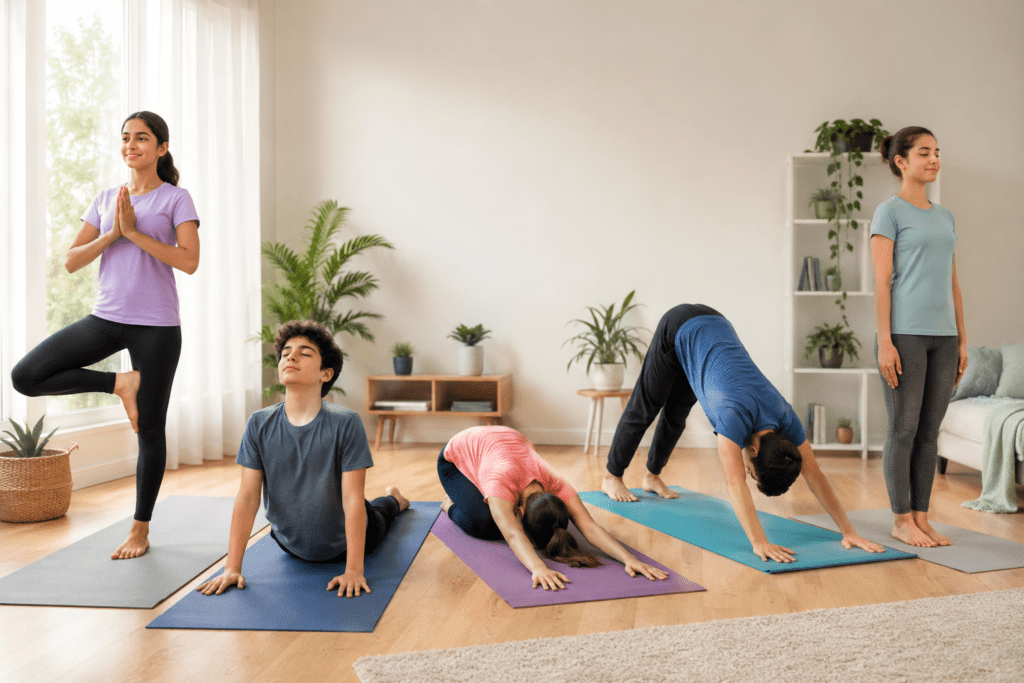
Teen life can be exciting, but it also comes with school pressure, screen time, sports, social challenges, and changing emotions. These everyday demands can lead to stress, poor posture, muscle tightness, and difficulty concentrating. One of the easiest and healthiest ways to feel better is by practicing yoga.
The good news? You don’t need a gym membership or expensive equipment. With just a yoga mat or a soft surface, teens can enjoy the physical and mental benefits of yoga right from home.
This guide introduces 10 beginner-friendly yoga poses that are safe, simple, and effective for teenagers. Whether you’re completely new to yoga or looking to build a healthy daily habit, these poses will help improve flexibility, strength, balance, focus, and confidence.
Why Yoga Is Great for Teenagers
Yoga supports both physical and emotional well-being during the teenage years.
Benefits include:
- Improves flexibility and mobility
- Builds core and body strength
- Reduces stress and anxiety
- Enhances focus and concentration
- Corrects poor posture from studying or screen time
- Boosts energy naturally
- Improves sleep quality
- Encourages mindfulness and self-confidence
Even practicing for 10–20 minutes a day can make a noticeable difference.
1. Mountain Pose (Tadasana)
Mountain Pose may look simple, but it teaches proper posture and body awareness.
How to Do It
- Stand with your feet hip-width apart.
- Keep your spine straight.
- Relax your shoulders.
- Let your arms rest naturally beside you.
- Take slow, deep breaths.
Benefits
- Improves posture
- Builds body awareness
- Increases balance
- Promotes calm breathing
Hold for 30–60 seconds.
2. Child’s Pose (Balasana)
This relaxing pose gently stretches the body while calming the mind.
Steps
- Kneel on the floor.
- Sit back on your heels.
- Stretch your arms forward.
- Lower your forehead to the mat.
- Breathe slowly.
Benefits
- Relieves stress
- Stretches hips and back
- Reduces muscle tension
- Encourages relaxation
Hold for 1–2 minutes.
3. Cat-Cow Stretch
Perfect for warming up the spine before other yoga poses.
How to Practice
Start on your hands and knees.
Cat Pose
- Round your back.
- Tuck your chin.
Cow Pose
- Lift your chest.
- Raise your head.
- Arch your back gently.
Repeat for 8–10 rounds.
Benefits
- Improves spinal mobility
- Reduces back stiffness
- Releases neck tension
- Increases flexibility
4. Downward-Facing Dog (Adho Mukha Svanasana)
One of the most popular yoga poses for beginners.
Instructions
- Start on hands and knees.
- Lift your hips toward the ceiling.
- Straighten your legs as much as comfortable.
- Keep your back long.
Benefits
- Strengthens arms
- Stretches hamstrings
- Improves circulation
- Builds full-body strength
Hold for 20–40 seconds.
5. Cobra Pose (Bhujangasana)
Great for teens who spend hours studying or using phones.
Steps
- Lie on your stomach.
- Place hands beneath your shoulders.
- Press gently into your palms.
- Lift your chest while keeping elbows slightly bent.
Benefits
- Opens the chest
- Strengthens the back
- Improves posture
- Reduces stiffness
Hold for 20 seconds.
6. Tree Pose (Vrksasana)
Tree Pose develops balance and concentration.
How to Do It
- Stand tall.
- Place one foot on your inner calf or thigh (avoid the knee).
- Bring hands together.
- Focus on one point.
Benefits
- Improves balance
- Strengthens legs
- Builds concentration
- Boosts confidence
Hold for 30 seconds each side.
7. Butterfly Pose (Baddha Konasana)
Excellent for increasing hip flexibility.
Instructions
- Sit comfortably.
- Bring soles of your feet together.
- Hold your feet.
- Gently move knees up and down.
Benefits
- Opens hips
- Improves flexibility
- Reduces lower-body tightness
- Encourages relaxation
Practice for 1 minute.
8. Bridge Pose (Setu Bandhasana)
Bridge Pose strengthens muscles while opening the front of the body.
Steps
- Lie on your back.
- Bend your knees.
- Place feet flat.
- Lift your hips upward.
Benefits
- Strengthens glutes
- Supports the lower back
- Opens chest
- Improves posture
Hold for 20–30 seconds.
9. Seated Forward Fold (Paschimottanasana)
A calming stretch after school or sports.
Instructions
- Sit with legs extended.
- Keep your back straight.
- Reach toward your feet.
- Go only as far as comfortable.
Benefits
- Stretches hamstrings
- Relaxes the nervous system
- Improves flexibility
- Reduces stress
Hold for 30–60 seconds.
10. Corpse Pose (Savasana)
The final relaxation pose is one of the most important parts of yoga.
Steps
- Lie flat on your back.
- Relax your arms and legs.
- Close your eyes.
- Focus on slow breathing.
Benefits
- Relieves stress
- Improves mental clarity
- Helps muscles recover
- Encourages better sleep
Stay for 5–10 minutes.
A Simple 15-Minute Yoga Routine for Teens
Try this beginner routine:
| Pose | Time |
|---|---|
| Mountain Pose | 1 minute |
| Cat-Cow | 2 minutes |
| Downward Dog | 1 minute |
| Cobra Pose | 1 minute |
| Tree Pose | 2 minutes |
| Butterfly Pose | 2 minutes |
| Bridge Pose | 2 minutes |
| Child’s Pose | 2 minutes |
| Savasana | 2 minutes |
This routine is perfect before school, after homework, or before bedtime.
Yoga Safety Tips for Teens
To practice safely:
- Warm up before stretching.
- Never force a pose.
- Breathe slowly throughout each movement.
- Wear comfortable clothing.
- Practice on a non-slip surface.
- Stay hydrated.
- Stop if you feel pain.
- Teens with injuries or medical conditions should consult a healthcare professional before starting a new exercise routine.
Common Beginner Mistakes
Avoid these common errors:
- Holding your breath
- Comparing yourself to others
- Stretching too aggressively
- Skipping warm-ups
- Practicing on slippery floors
- Rushing through poses
Remember, yoga is about progress—not perfection.
Frequently Asked Questions
Can beginners do yoga at home?
Yes. These beginner-friendly poses are safe to learn at home with enough space and careful attention to proper form.
How often should teens practice yoga?
Aim for 3–5 sessions per week, or even 10–20 minutes daily for the best results.
Is yoga safe for teenagers?
Yes. Yoga is generally safe for healthy teens when practiced with proper technique. If a teen has an injury or medical condition, it’s best to seek advice from a healthcare provider first.
Does yoga help with school stress?
Absolutely. Yoga combines movement and mindful breathing, which can help reduce stress, improve concentration, and support emotional well-being.
Do I need special equipment?
No. A yoga mat is helpful, but a clean carpet or soft floor works well for beginners.
Final Thoughts
Yoga is one of the simplest and most rewarding habits teenagers can develop. With just a few minutes each day, these 10 easy yoga poses can improve flexibility, posture, balance, strength, and mental well-being. More importantly, yoga encourages teens to slow down, breathe deeply, and build a healthier relationship with their bodies and minds.
Whether you’re looking to ease stress after school, improve athletic performance, or simply stay active at home, these beginner-friendly poses are a great place to start. Stay consistent, listen to your body, and enjoy the journey toward better physical and emotional health.